
Back to Blog
Blog / Safety & Workforce
Safety & Workforce
Zero-Harm Initiative: Baraka's New Standards for Worker Safety Training
Ship recycling is one of the most hazardous industrial activities in the world. At Baraka Ship Recycling, our Zero-Harm Initiative represents a comprehensive commitment to ensuring that every worker goes home safely at the end of every shift. Here's how we're raising the bar.
HSE Department
Health, Safety & Environment
28 Apr 20268 min
The ship recycling industry has historically carried a troubling safety record. The combination of heavy industrial work, confined spaces, hazardous materials, and the structural unpredictability of vessels at various stages of dismantling creates an environment where, without rigorous safety management, the risk of serious injury or fatality is material. At Baraka Ship Recycling, we have made the elimination of workplace harm the central commitment of our operational philosophy.
Our Zero-Harm Initiative, launched with the commencement of operations at our Sitakunda facility, is built on three pillars: competency-based training, engineering controls, and a safety culture that empowers every worker to stop work when they identify an unsafe condition. The third pillar is, in many respects, the most important — and the most difficult to build in an industry where hierarchical deference to supervisors has historically discouraged workers from speaking up.
Every new worker joining Baraka Ship Recycling completes a mandatory induction programme before they are permitted on the active yard. The induction covers hazard identification, personal protective equipment selection and use, emergency procedures, and the Stop Work Authority — a formal, protected right to halt any operation that the worker believes presents an uncontrolled risk. The induction is delivered in Bengali, with visual and practical components that accommodate varying levels of literacy.
Role-specific training supplements the general induction. Gas cutters complete a competency assessment covering safe use of oxy-fuel cutting equipment, fire watch protocols, and hot work permit requirements. Crane operators are trained and assessed against a lifting operations standard that includes load calculation, sling inspection, and exclusion zone management. Workers assigned to confined space entry — one of the highest-risk activities on any ship recycling yard — complete a standalone programme covering atmospheric testing, standby person requirements, and rescue procedures.
On the engineering controls side, our yard layout has been designed to physically separate active cutting zones from material movement routes, eliminating the mixed-traffic conditions that contribute to struck-by incidents in less well-organised operations. All elevated work areas are fitted with guardrails and toe boards. Our gas storage and distribution system was designed by a specialist industrial gases contractor and includes automatic shut-off valves linked to our fire detection network.
We measure safety performance through a combination of lagging indicators — lost-time injury frequency rate, total recordable incident rate — and leading indicators, including near-miss reporting rate, safety observation frequency, and training completion percentage. Our experience is consistent with international research: yards with high near-miss reporting rates have lower serious incident rates, because near-miss reports surface the precursors to accidents before those accidents occur. Building a reporting culture is therefore not just a compliance activity — it is the most effective investment a yard can make in preventing harm.
Worker SafetyOH&SZero HarmTrainingSocial Responsibility
Related Posts
Market & LDT Analysis
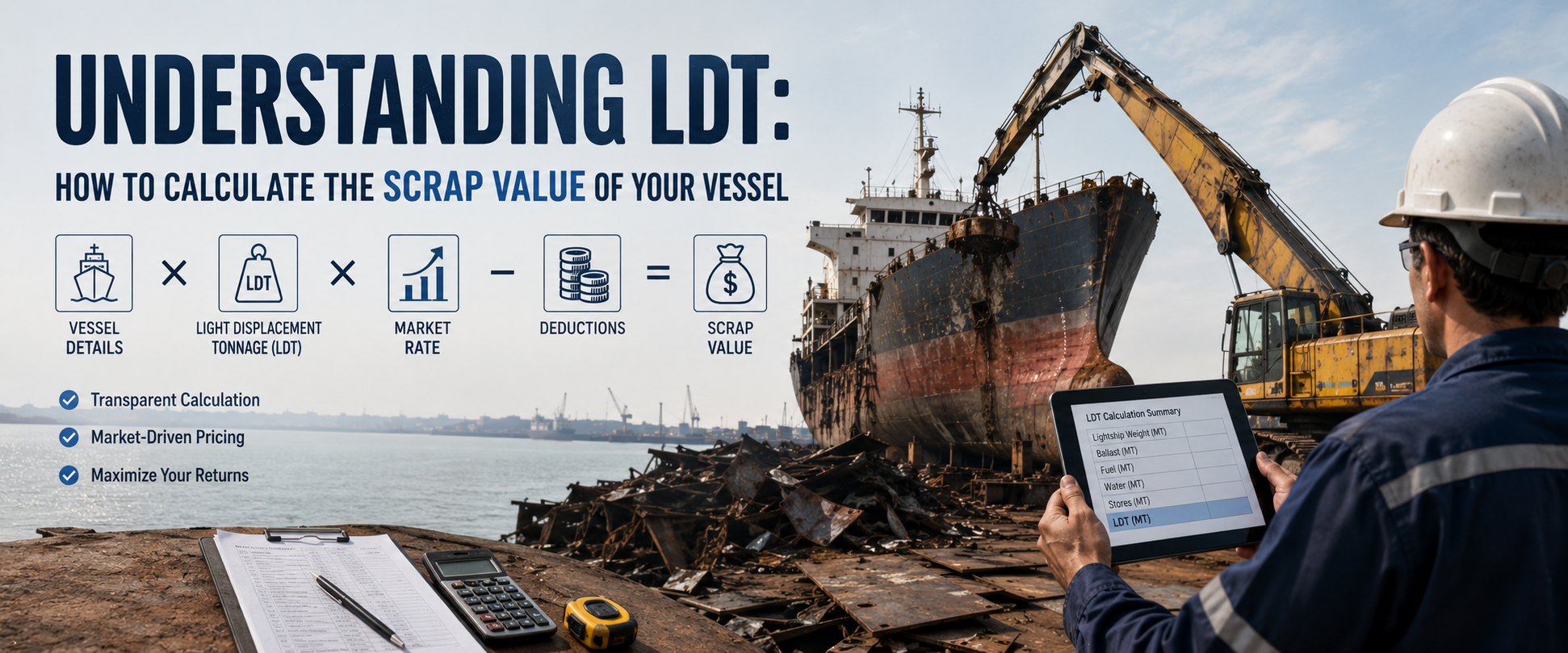
Understanding LDT: How to Calculate the Scrap Value of Your Vessel
28 Apr 2026 · Market Intelligence DeskRead
Circular Economy
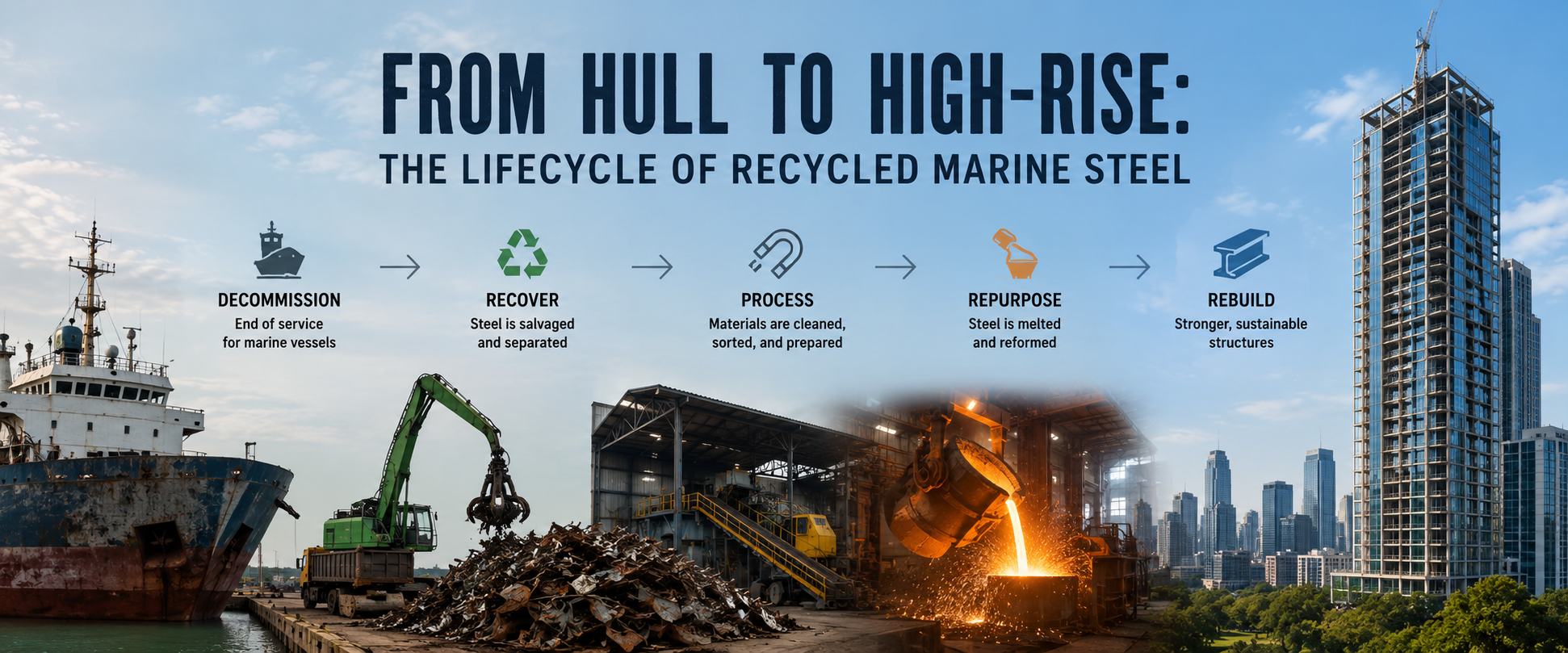
From Hull to High-Rise: The Lifecycle of Recycled Marine Steel
28 Apr 2026 · Sustainability TeamRead

Technical Insights
Advanced Hazardous Material Management: Safe Asbestos Removal in 2026
28 Apr 2026 · Technical Operations TeamRead