
Back to Blog
Blog / Circular Economy
Circular Economy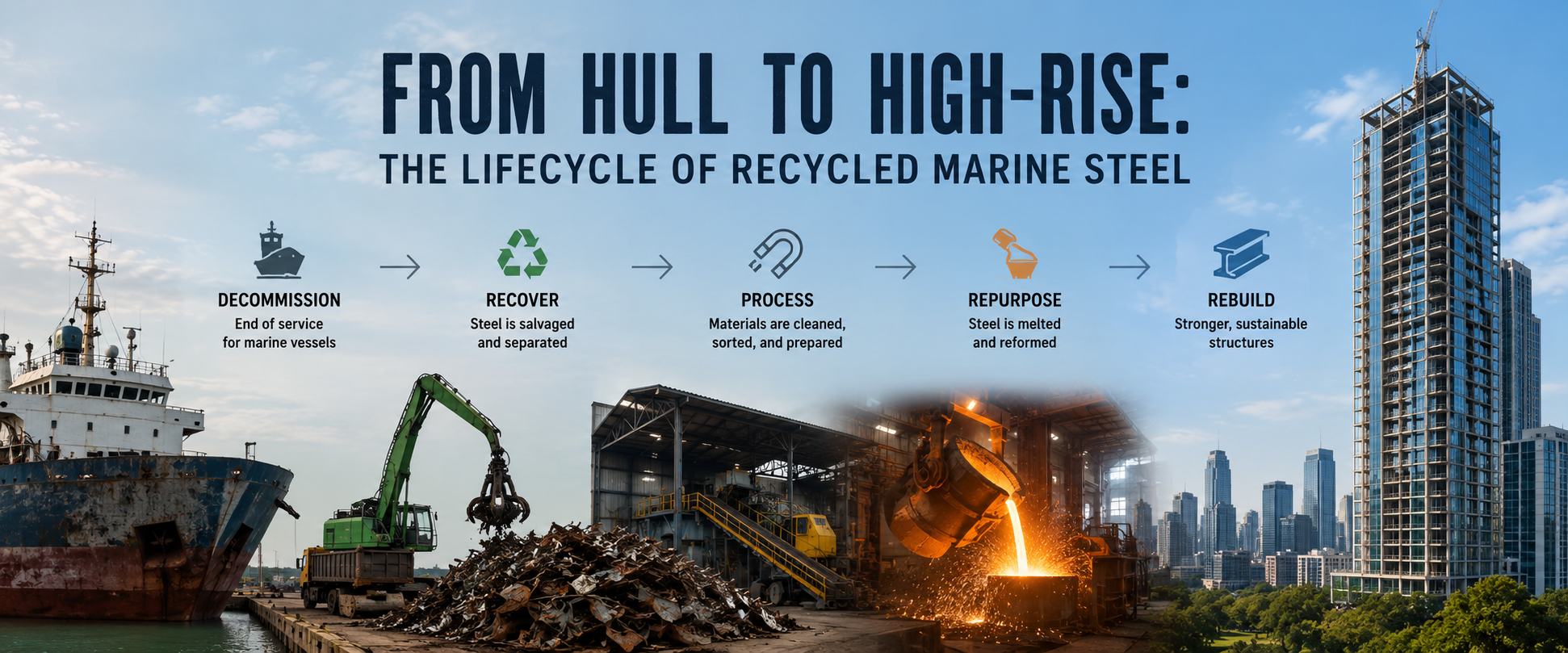
From Hull to High-Rise: The Lifecycle of Recycled Marine Steel
When a ship is recycled at a compliant yard in Bangladesh, its steel does not disappear — it is reborn as rebar, structural sections, and sheet metal that forms the skeleton of buildings, bridges, and infrastructure across South Asia. This is the circular economy of ship recycling in action.
Sustainability Team
ESG & Circular Economy
28 Apr 20267 min
The narrative of ship recycling is often framed around what is removed and disposed of — hazardous materials, waste oils, contaminated bilge water. But the overwhelming majority of what a ship contains is not waste at all. A typical commercial vessel is 95–98% steel by weight. When that vessel is responsibly dismantled at a certified recycling yard, almost all of that steel re-enters productive use within months, feeding directly into the construction economy of the host country.
In Bangladesh, the link between ship recycling and construction is unusually direct and economically significant. The steel recovered from dismantled vessels at Sitakunda yards is sold to a network of re-rolling mills concentrated in the Chittagong industrial area. These mills process the recovered ship plate into rebar, angle sections, and flat bar — the primary structural materials used in Bangladesh's rapidly expanding building and infrastructure sector. Ship-derived steel accounts for an estimated 70–80% of Bangladesh's total domestically produced steel supply.
The circular economy credentials of this process are, in material terms, compelling. Producing steel from recovered scrap via electric arc furnace (EAF) re-rolling requires approximately 75% less energy than producing virgin steel from iron ore via a blast furnace route. The carbon intensity of scrap-based steel production is correspondingly lower, making ship-derived re-rolled steel one of the more sustainable building materials available within the South Asian market context.
Baraka Ship Recycling has begun working with downstream re-rolling partners to develop material provenance documentation — essentially a chain of custody record that links recovered steel from a specific vessel to the re-rolled product it becomes. This traceability is increasingly relevant to international construction contractors and development finance institutions that require supply chain transparency as part of their own ESG reporting frameworks.
Beyond steel, the circular recovery of non-ferrous metals — copper wiring, brass fittings, aluminium superstructure components — adds further value to the recycling process. Recovered equipment such as cranes, generators, pumps, and navigational instruments is assessed for reuse or remanufacturing before any material enters the scrap stream. This cascade of reuse before recycling is the purest expression of circular economy principles applied to the end-of-life vessel management context.
The vision for the next phase of this circular system is one in which the provenance and environmental performance of ship-derived steel is formally certified and recognised within green building standards. As Bangladesh's construction sector matures and international investors and developers bring global ESG requirements to projects in the country, the demand for traceable, low-carbon structural steel will grow. Baraka Ship Recycling is positioning itself at the origin point of that supply chain.
Circular EconomyRecycled SteelSustainabilityConstructionBangladesh
Related Posts
Market & LDT Analysis
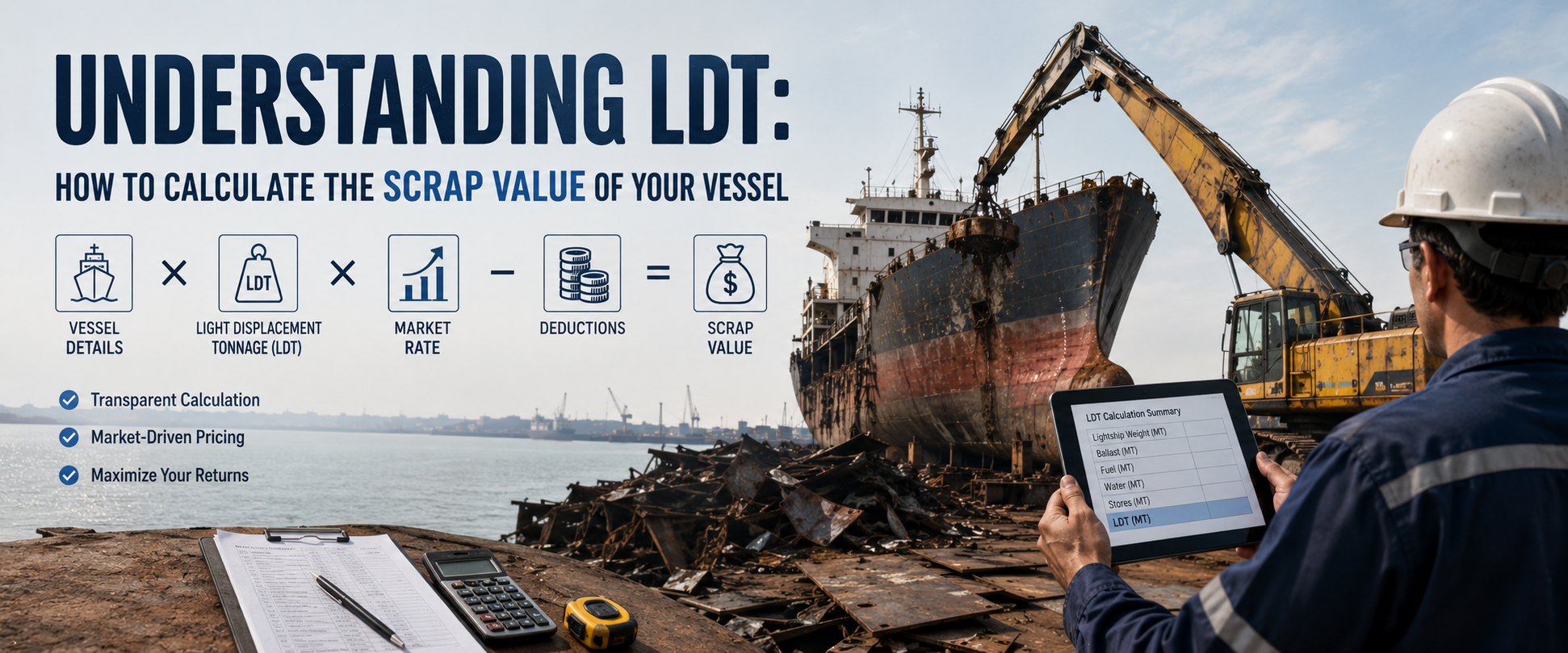
Understanding LDT: How to Calculate the Scrap Value of Your Vessel
28 Apr 2026 · Market Intelligence DeskRead

Safety & Workforce
Zero-Harm Initiative: Baraka's New Standards for Worker Safety Training
28 Apr 2026 · HSE DepartmentRead
Technical Insights
Advanced Hazardous Material Management: Safe Asbestos Removal in 2026
28 Apr 2026 · Technical Operations TeamRead