
Back to Blog
Blog / Market & LDT Analysis
Market & LDT Analysis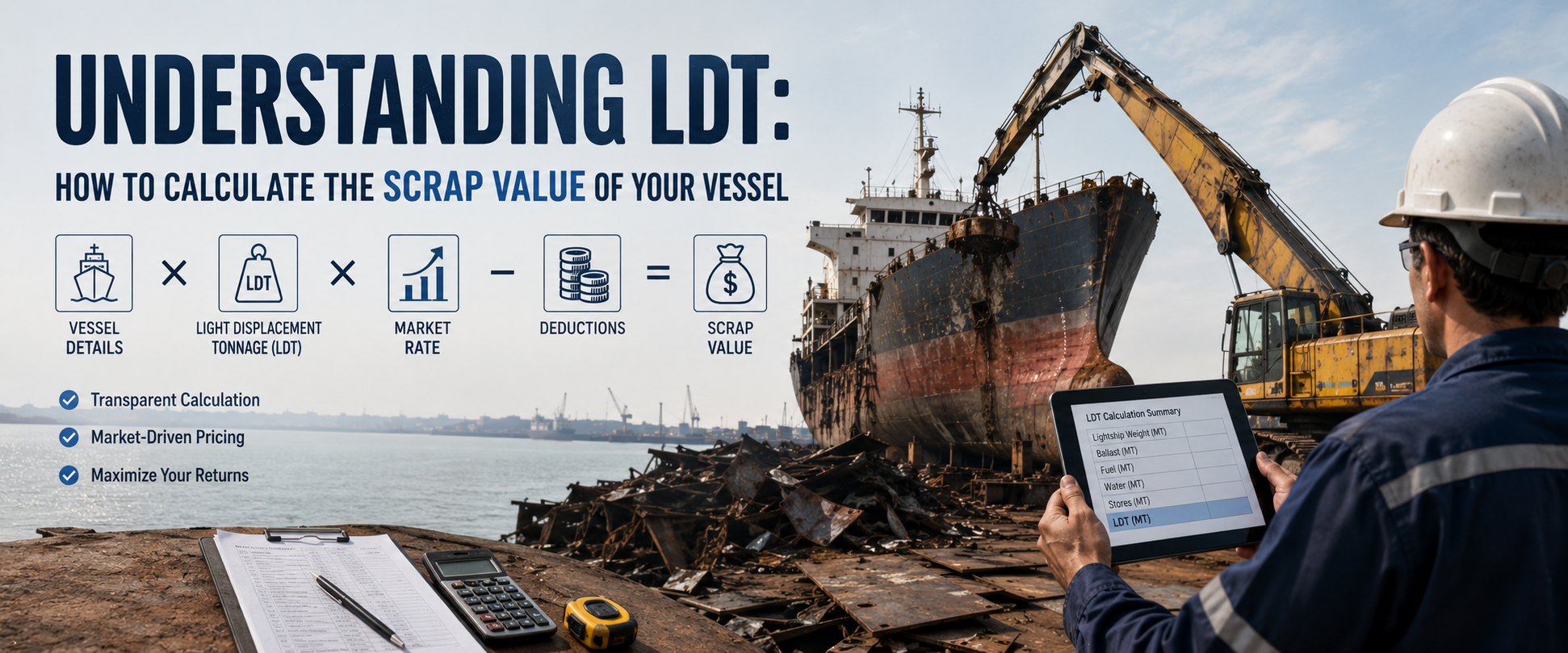
Understanding LDT: How to Calculate the Scrap Value of Your Vessel
Light Displacement Tonnage (LDT) is the primary metric used to price end-of-life vessels for recycling. This guide explains how LDT is measured, what drives the USD/LDT rate in Bangladesh, and how shipowners can maximise the value they achieve at the point of recycling.
Market Intelligence Desk
Commercial & Trading
28 Apr 20269 min
When a vessel reaches the end of its commercial life and a decision is made to recycle rather than trade or lay up, the financial outcome of the transaction is almost entirely determined by a single metric: Light Displacement Tonnage, or LDT. Understanding what LDT represents, how it is calculated, and what drives the market rate per LDT is essential for any shipowner or cash buyer seeking to optimise the value extracted from end-of-life tonnage.
LDT measures the weight of a vessel when it is empty — that is, without cargo, fuel, ballast, crew, provisions, or any other removable items. It represents, in effect, the pure weight of the ship's structure: steel, machinery, and fixed equipment. Since recycling yards are primarily buying this steel, LDT is the natural unit of measure for pricing. The heavier the ship's empty structure, the more recoverable steel it contains, and the more a recycler will pay.
Calculating a vessel's LDT precisely requires access to the ship's stability booklet or trim and stability manual, which contains the displacement curve — a graph of displacement against draft. LDT equals the displacement at the ship's lightship draft minus the weight of any items that are not considered part of the lightship condition. For vessels without up-to-date documentation, recyclers may estimate LDT from IMO-registered deadweight tonnage using vessel-type-specific conversion ratios, though these estimates carry meaningful uncertainty.
The price offered per LDT by Bangladesh recycling yards — currently among the highest in the world — is a function of several intersecting factors. Domestic steel demand is the primary driver: Bangladesh's construction sector consumes re-rolled ship plate as a low-cost substitute for billet steel, and the ex-yard scrap price in Chittagong moves broadly in line with rebar and billet prices on the Dhaka commodity market. When construction activity is high and steel inventories are low, LDT prices rise. When the construction sector slows, prices soften.
Beyond domestic steel fundamentals, the USD/LDT rate in Bangladesh is influenced by the Bangladeshi Taka/USD exchange rate, global freight market conditions (which affect the supply of end-of-life tonnage), and competition from recycling markets in India, Pakistan, and Turkey. Yards in all four sub-continent markets typically price within a narrow band of each other, with differentials reflecting relative regulatory compliance costs and domestic steel market conditions.
For shipowners evaluating the timing of a recycling sale, the key practical implication is that LDT pricing is cyclical and can vary by USD 50–100 per LDT or more across a market cycle. Engaging with multiple Bangladesh yards for competitive offers, understanding the timing of domestic steel market cycles, and presenting complete, credible vessel documentation — including a current IHM — are the primary levers available to a seller seeking to maximise value. Baraka Ship Recycling provides indicative LDT pricing on request for vessels with verified documentation.
LDTScrap ValueVessel ValuationMarket AnalysisShip Recycling
Related Posts
Circular Economy
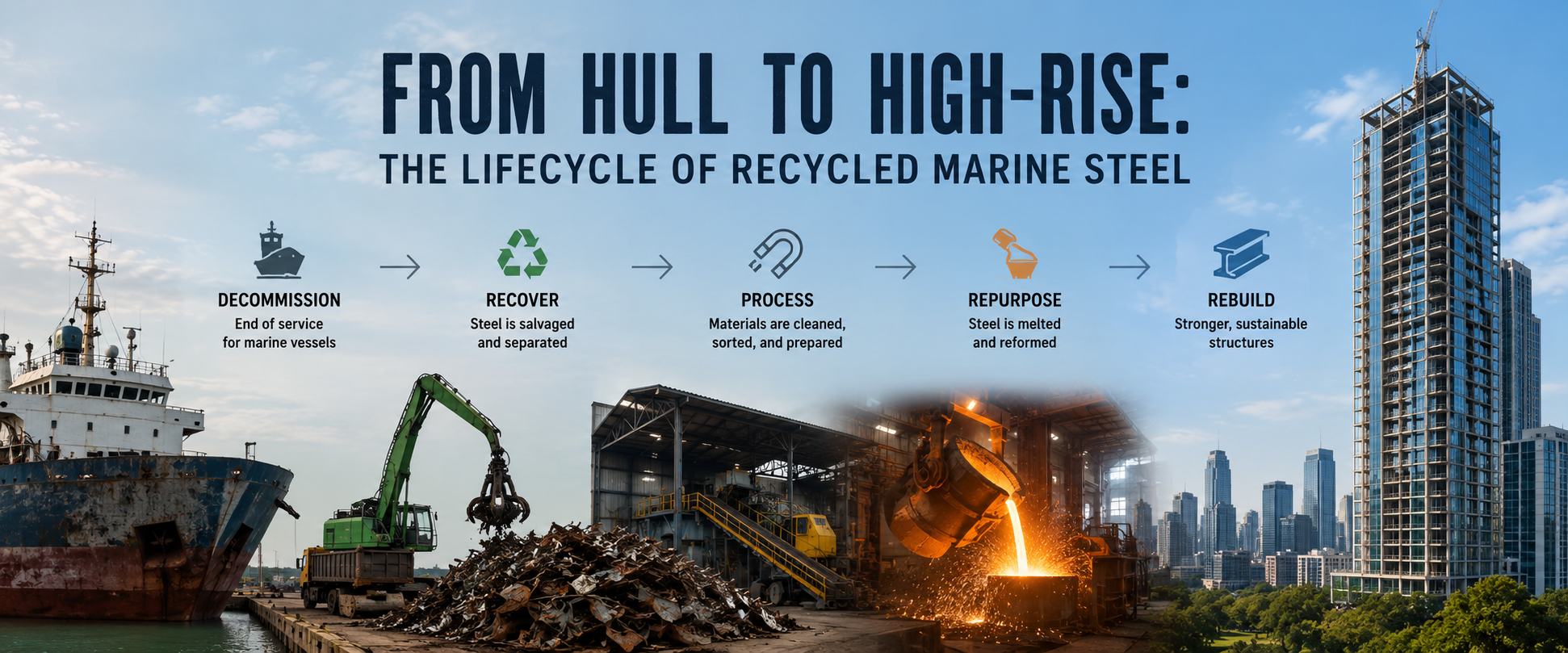
From Hull to High-Rise: The Lifecycle of Recycled Marine Steel
28 Apr 2026 · Sustainability TeamRead

Safety & Workforce
Zero-Harm Initiative: Baraka's New Standards for Worker Safety Training
28 Apr 2026 · HSE DepartmentRead

Technical Insights
Advanced Hazardous Material Management: Safe Asbestos Removal in 2026
28 Apr 2026 · Technical Operations TeamRead